

The Role of Civil Society in CEPA Implementation: Discussions in Ashtarak and Artashat
Hours and dates
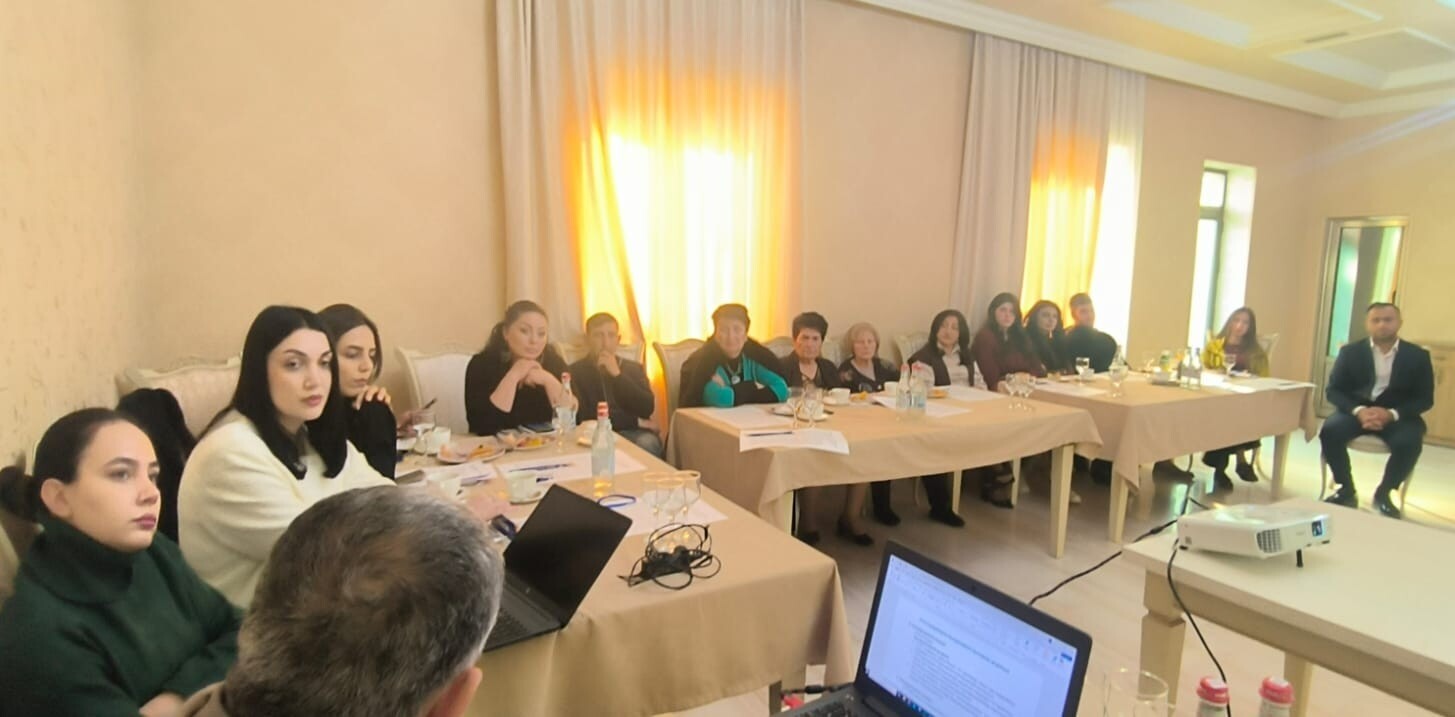
Within the framework of the “Support to the Monitoring, Implementation, and Communication of the Comprehensive and Enhanced Partnership Agreement (CEPA)” project funded by the European Union and implemented by GOPA-PACE, a discussion was held on October 22–23, 2025 for civil society organizations, active citizens, and other interested individuals from the Ararat and Aragatsotn regions.
Around 40 representatives of regional civil society and local self-government bodies took part in the event, aiming to deepen their knowledge on CEPA implementation, monitoring, evaluation, and the effective use of public communication mechanisms.

During the first part of the event, the project’s expert, Mushegh Yekmalyan, presented the significance and main directions of the Armenia-EU Comprehensive and Enhanced Partnership Agreement (CEPA), including its roadmap. Special attention was given to the platform www.cepacso.am, a resource designed for civil society to access tools for monitoring, researching, evaluating, and observing CEPA processes, as well as to explore existing reports.
Following this, Mushegh Yekmalyan and the project’s expert, Davit Amiryan, emphasized the role of civil society in overseeing CEPA implementation. Together with participants, they discussed specific issues characteristic of the Ararat and Aragatsotn regions that could become focal points for local civil society organizations from the perspective of CEPA and its roadmap. The discussion was structured around presenting the approaches of monitoring methodologies already developed and initiatives already underway.

In the second part of the event, moderated by Davit Amiryan and enriched with real-life examples, participants examined practical experience and essential skills required for developing evidence-based policy documents grounded in monitoring and evaluation results. As part of the applied session, participants also presented potential examples reflecting challenges specific to their regions.
Communication expert Hayk Abrahamyan, through an interactive and participatory discussion using everyday examples, explored communication tools and challenges faced by civil society. Under his guidance, participants jointly analyzed the characteristics of possible CEPA-related communication campaigns in the Ararat and Aragatsotn regions.
Basing their discussions on region-specific issues, such as introducing new opportunities in the agricultural sector aligned with European standards, managing the use of underground water resources, soil salinization, access to quality education, management of regional transportation, and mobility limitations for persons with disabilities, experts and participants examined the importance of localizing CEPA provisions, as well as realistic actions for communication and advocacy around these issues.

Thanks to the interactive format and brainstorming activities, the discussions served as a practical and applicable platform for participants, strengthening their capacities and skills for future monitoring and report preparation within their organizations.
