

The Role of Civil Society in the CEPA Implementation Process: Discussion in Yeghegnadzor
Hours and dates
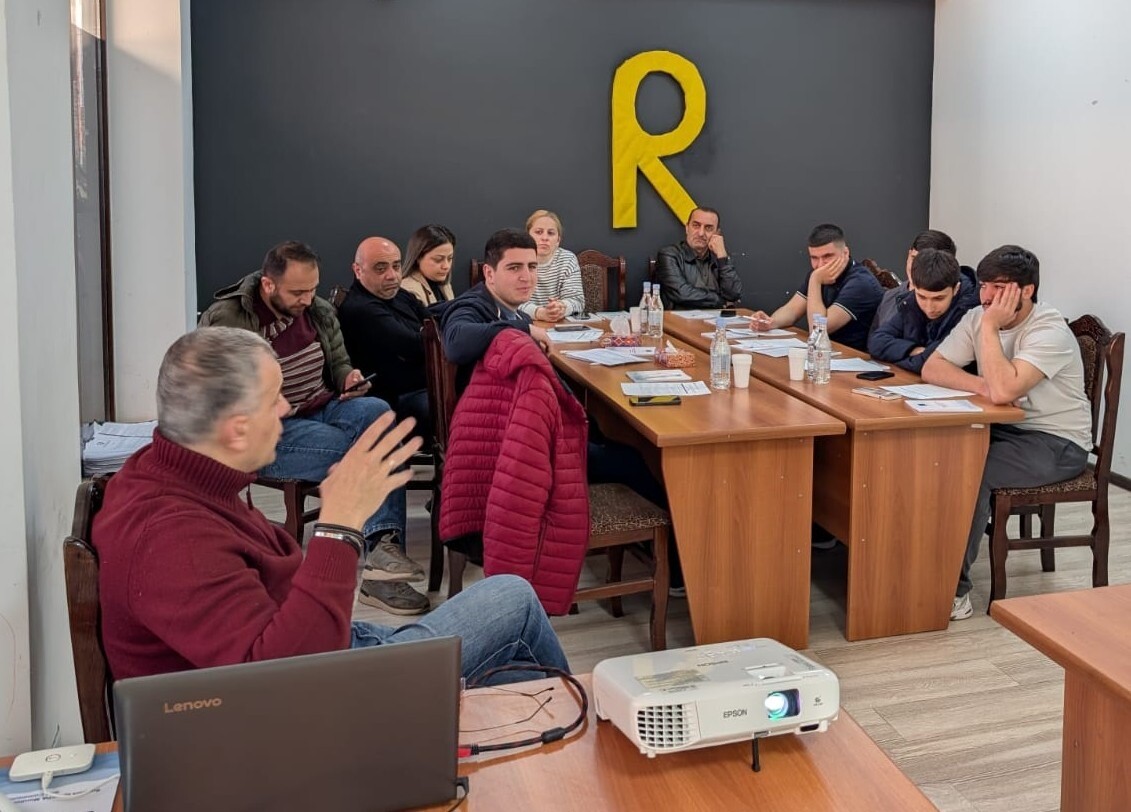
Within the framework of the “Support to CEPA Monitoring, Implementation and Communication” project, funded by the European Union and implemented by GOPA PACE, a discussion dedicated to the Comprehensive and Enhanced Partnership Agreement (CEPA) between Armenia and the European Union was held on March 18, 2026, for civil society organizations, active citizens, and other interested individuals from the Vayots Dzor region.
Representatives of regional civil society organizations, informal groups, and active citizens (10 participants in total) attended the event with the aim of deepening their knowledge of CEPA implementation, monitoring, evaluation, and the active use of public communication mechanisms, as well as discussing possible ways to bring CEPA to life directly in their communities.
During the first part of the event, project expert Mushegh Yekmalyan presented the significance and key directions of the Agreement, including its roadmap. Particular attention was given to the www.cepacso.am platform as a resource created for civil society, providing access to tools for monitoring, research, evaluation, and assessment of CEPA-related processes, as well as access to existing reports.
Mushegh Yekmalyan and project expert Davit Amiryan emphasized the role of civil society in overseeing CEPA implementation. Together with participants, they discussed specific issues characteristic of the Vayots Dzor region that could become subjects of engagement for local civil society organizations from the perspective of CEPA and its roadmap. The discussion was structured around approaches derived from already implemented initiatives and the developed monitoring methodology, while also taking into account proposals and opinions voiced during previous discussions.
Moderated by Davit Amiryan, the second part of the event presented practical examples and explored, at an applied level, the experience and key skills required for developing evidence-based policy documents based on monitoring and evaluation results. As a practical exercise, participants also presented examples of issues specific to their local communities.
Through an interactive and participatory discussion, communication expert Hayk Abrahamyan used examples drawn from everyday life to explore civil society communication tools and challenges with the group. Under his guidance, participants jointly analyzed the specific features of potential communication campaigns on CEPA in the Vayots Dzor region.
By identifying issues specific to the region, experts and participants discussed them within the CEPA framework. Among these issues were the need for more active communication mechanisms and channels for engaging regional civil society organizations, active citizens, youth, and informal groups. One potential avenue identified was the use of regional Facebook groups and strengthening their connections with other institutions.
Particular importance was attached to trainings and educational activities on these and related topics for young people. Participants highlighted the fact that there is no higher education institution in the Vayots Dzor region, resulting in many young people leaving the region to pursue their studies elsewhere.
Participants also drew attention to the fact that residents generally demonstrate low levels of engagement in influencing decision-making processes at the regional level, including monitoring the implementation of decisions that have already been adopted.
Environmental issues remain highly significant in the region, where several dozen small hydropower plants operate, creating challenges related to land irrigation. Despite being widely recognized as a wine-producing region, Vayots Dzor faces serious difficulties related to grape procurement. Participants also raised concerns regarding access to quality social and psychological support services.
