

The Role of Civil Society in the Implementation of CEPA: Discussion Held in Goris
Hours and dates
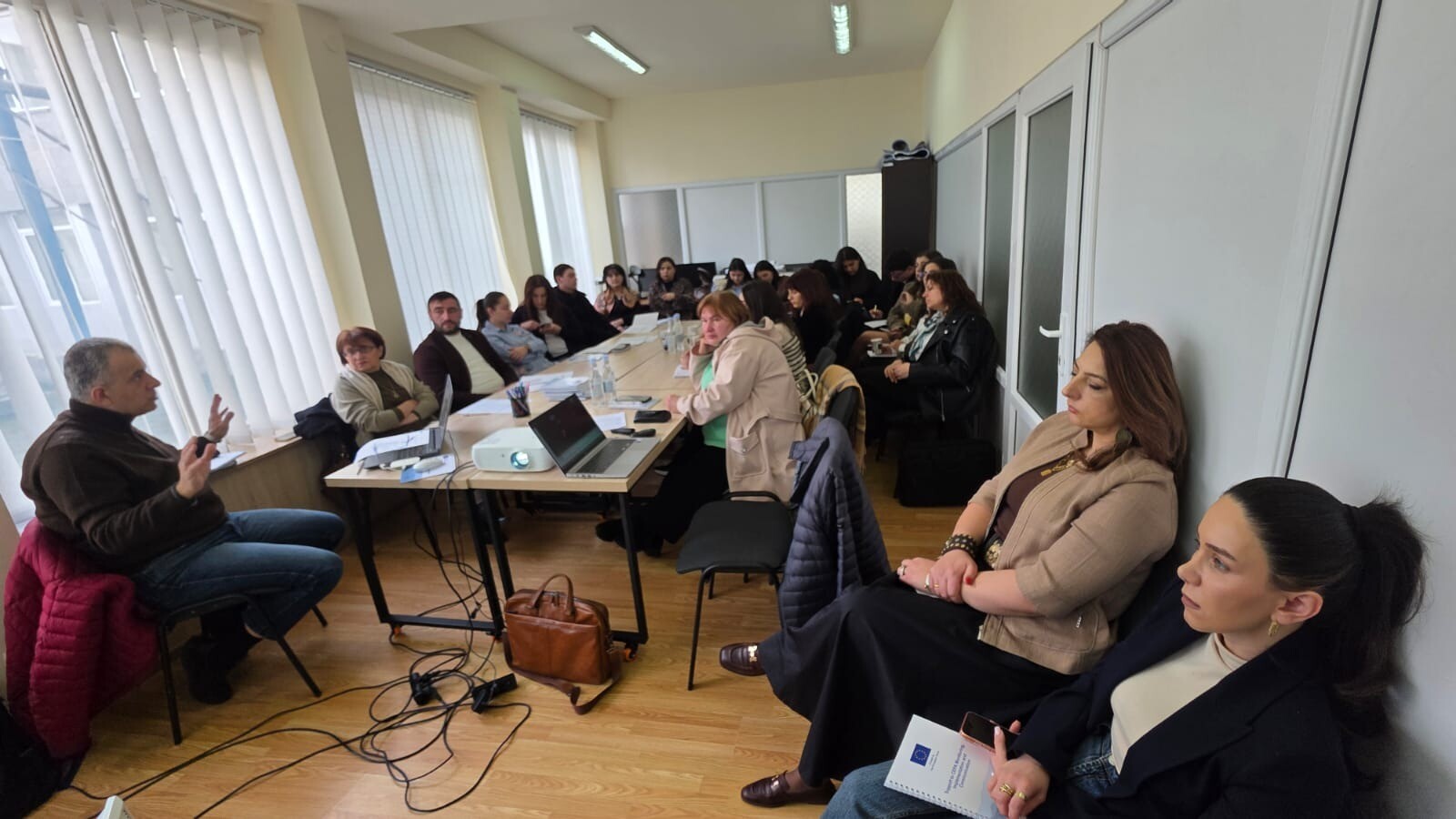
Within the framework of the “Support to CEPA Monitoring, Implementation and Communication” project, funded by the European Union and implemented by GOPA PACE, a discussion dedicated to the Comprehensive and Enhanced Partnership Agreement (CEPA) between Armenia and the European Union was held on March 19, 2026, for civil society organizations, active citizens, and other interested stakeholders from Syunik region.
More than 20 representatives of regional civil society organizations and local self-government bodies participated in the event. The discussion aimed to deepen participants’ knowledge of CEPA implementation, monitoring, evaluation, and public communication mechanisms, as well as to explore practical ways of bringing the Agreement to life in their communities and regions.
During the first part of the event, project expert Mushegh Yekmalyan presented the significance of the Agreement and its key areas, including the CEPA Roadmap. Particular attention was paid to the www.cepacso.am platform, which serves as a resource for civil society actors by providing access to tools for monitoring, research, assessment, and evaluation of CEPA-related processes, as well as to existing reports and analytical materials.
Mushegh Yekmalyan and project expert Davit Amiryan emphasized the important role of civil society in overseeing the implementation of CEPA. Together with participants, they discussed specific challenges facing Syunik region that could become subjects of advocacy and engagement for local civil society organizations from the perspective of CEPA and its Roadmap. The discussion was structured around previously implemented initiatives and the monitoring methodology developed within the project, while also taking into account recommendations and feedback collected during earlier consultations.
Moderated by Davit Amiryan, the second part of the event focused on practical examples and explored experiences in developing evidence-based policy documents grounded in monitoring and evaluation findings. Participants also presented examples of local issues from their own communities as part of a practical exercise.
Through an interactive and participatory discussion, communications expert Hayk Abrahamyan used real-life examples to engage participants in exploring communication tools and challenges facing civil society organizations. Under his guidance, participants jointly analyzed the characteristics and opportunities of potential CEPA-related communication campaigns in Syunik.
Experts and participants collected and discussed issues specific to Syunik region within the context of CEPA implementation. Among the key topics raised was the need for regular and thematically targeted meetings that would address not only Armenia–EU relations but also a wide range of other relevant issues. Participants stressed the importance of involving local self-government staff in information and awareness-raising discussions related to CEPA.
It was also noted that certain discussions should be organized jointly, ensuring the participation of both local government representatives and civil society organizations. Such cooperation could later serve as a basis for effective advocacy during the development of community development programs.
Participants highlighted the challenge of retaining young people in the region, noting the lack of sufficient recreational and social spaces, which reduces young people’s sense of belonging and interest in remaining in the province.
Employment opportunities were also identified as one of the major concerns affecting youth. For Syunik region, it is essential to keep young people engaged and involved in their communities through various activities focused on community development, non-formal education, participation in local decision-making processes, human rights and women’s issues, as well as environmental protection initiatives.
These issues can serve as topics for regular meetings, discussions, and capacity-building activities that encourage young people to remain in the region and strengthen local resilience. Participants also emphasized the need to improve the quality of higher education in Goris and across the region so that young people can acquire competitive skills and qualifications, find employment opportunities locally, and be less inclined to leave the region.
