

The Role of Civil Society in the Implementation of CEPA: Discussion Held in Gavar
Hours and dates
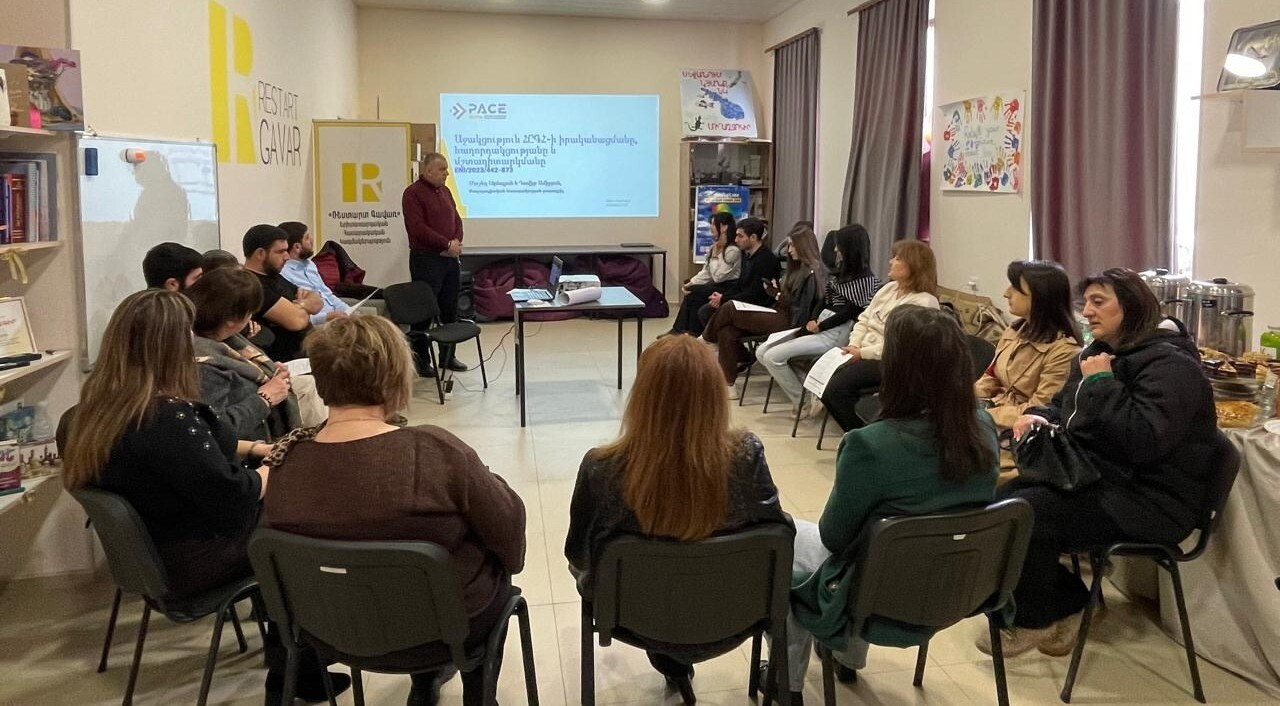
Within the framework of the “Support to CEPA Monitoring, Implementation and Communication” project, funded by the European Union and implemented by GOPA PACE, a discussion dedicated to the Comprehensive and Enhanced Partnership Agreement (CEPA) between Armenia and the European Union was held on March 31, 2026, at the office of Restart Gavar NGO for civil society organizations, active citizens, and other interested stakeholders from the Gegharkunik region.
More than 25 representatives of regional civil society organizations, local self-government bodies, and the Regional Administration participated in the event. The discussion aimed to deepen participants’ knowledge of CEPA implementation, monitoring, evaluation, and public communication mechanisms, as well as to explore practical ways of bringing the Agreement to life in their region.
During the first part of the event, project expert Davit Amiryan presented the significance of the Agreement and its key areas, including the CEPA Roadmap. Particular attention was paid to the www.cepacso.am platform, which serves as a resource for civil society actors by providing access to tools for monitoring, research, assessment, and evaluation of CEPA-related processes, as well as to existing reports and analytical materials.
Davit Amiryan emphasized the important role of civil society in overseeing the implementation of CEPA. Together with participants, he discussed specific challenges facing the Gegharkunik region that could become subjects of advocacy and engagement for local civil society organizations from the perspective of CEPA and its Roadmap.
The discussion was structured around previously implemented initiatives and the monitoring methodology developed within the project, while also taking into account recommendations and feedback collected during earlier consultations.
Moderated by Davit Amiryan, the second part of the event focused on practical examples and explored experiences in developing evidence-based policy documents grounded in monitoring and evaluation findings. Participants also presented examples of local issues from their own communities as part of a practical exercise.

Through an interactive and participatory discussion, communications expert Hayk Abrahamyan used real-life examples to engage participants in exploring communication tools and challenges facing civil society organizations. Under his guidance, participants jointly analyzed the characteristics and opportunities of potential CEPA-related communication campaigns in the Gegharkunik region.
Experts and participants identified and discussed issues specific to the Gegharkunik region within the context of CEPA implementation. Among the key topics raised was the need to organize such training courses more frequently and to institutionalize them as a means of strengthening the capacities of local stakeholders. Participants also highlighted challenges related to youth engagement in the region.
Although Gavar hosts a university, participants emphasized the need for a greater number of projects and initiatives targeting young people, enabling their involvement in activities focused on community development and non-formal education. These activities could include participation in local self-government decision-making processes, human rights and women’s issues, environmental protection initiatives particularly those related to the condition of Lake Sevan as well as educational challenges in schools, teachers’ attitudes, parental engagement, and support for children’s development.
The importance of promoting reading habits was also emphasized, as participants noted that children do not read sufficiently. The discussion further explored ways to translate CEPA-related priorities into practical actions and implementation mechanisms at the local self-government level.
